Fruit Leather Development: Processing, Formulation and Commercial Production of Fruit Bars and Aam Papad (2026)
By Arjun N|November 5, 2026|9 min read
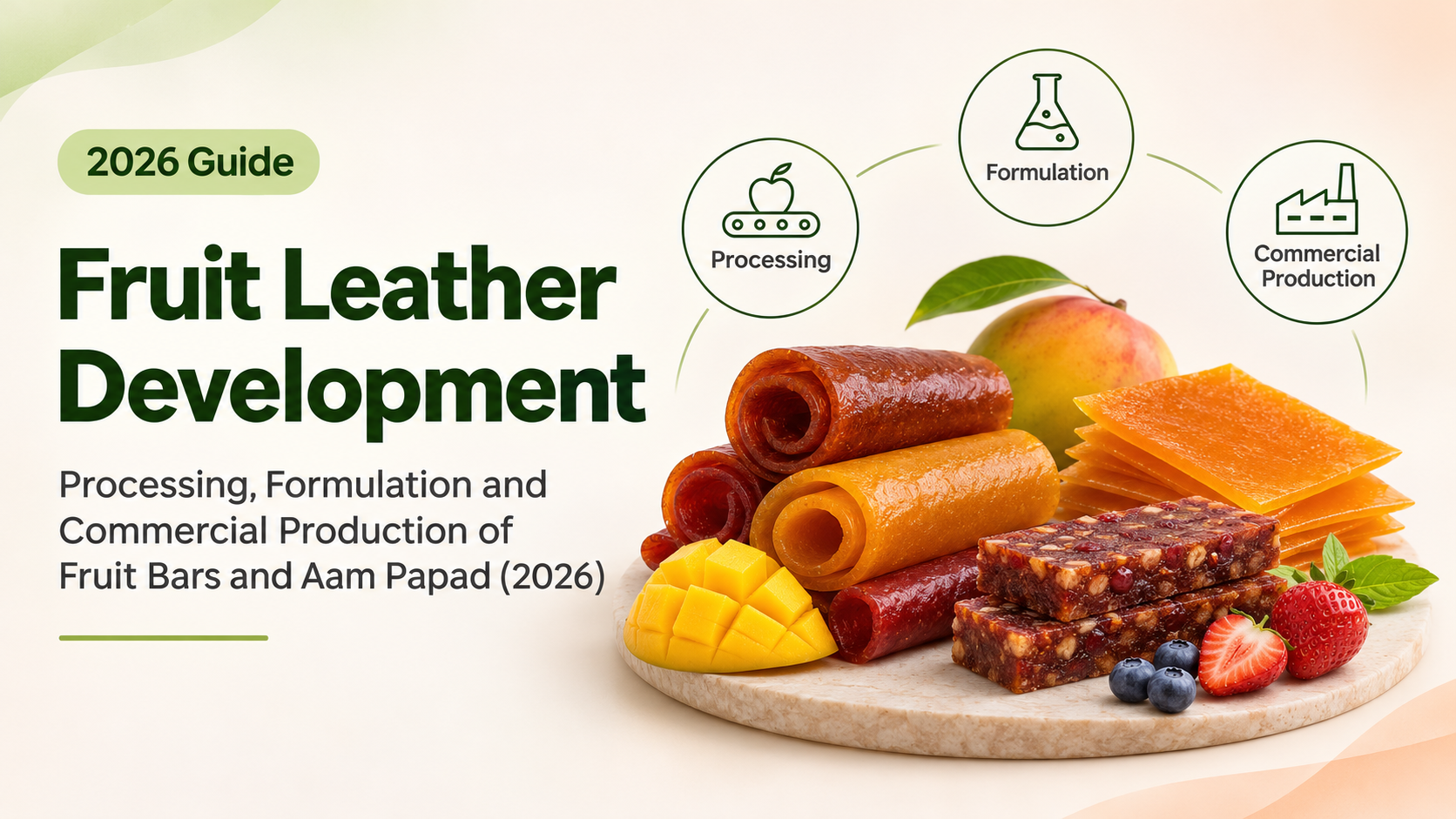
Fruit Leather Development: Processing, Formulation and Commercial Production of Fruit Bars and Aam Papad (2026)
Key Takeaways
- Three things preserve fruit leather. Low moisture of 15 to 25%, the fruit's natural acidity and a high sugar content keep it shelf-stable, for up to 9 months when properly dried and packed (FAO).
- Dry at about 60°C, not hotter. Drying at 70°C was faster but darkened the leather and made it chewier; 60°C gave the best quality (MIT ADT University).
- Sugar is a recipe lever. FAO's mango leather method adds sugar at 10 to 15% of pulp weight, depending on variety and taste (FAO, same source).
- Spread thickness sets drying time. FAO's method pours hot puree at 15 kg per square metre of tray (same source); thicker layers dry slowly and unevenly.
- Storage heat causes browning. Mango and pineapple leathers stored at 35°C browned more than those at 25°C (Revista Facultad Nacional de Agronomía Medellín), so packaging and cool storage matter.

Founder & CEO, SolutionBuggy
Arjun N spent a decade in manufacturing and industrial engineering before founding SolutionBuggy in 2016. Today, SolutionBuggy connects 60,000+ registered MSMEs with 12,000+ verified manufacturing consultants across India, with 3,500+ completed projects and a 4.5 client satisfaction rating.
FOUNDER & CEO
Solutions For
Reach Us
Bangalore (Head Office)
#249, 2nd floor, 14th Main Rd, Sector 7, H.S.R Layout, Bangalore - 560102.
Across India : Delhi | Pune | Mumbai | Chennai | Ahmedabad | Hyderabad | Kolkata, and 30+ major cities across India
Copyright © 2026 SolBuggy. All Rights Reserved