How to Develop a Plant-Based Coconut Yogurt: Formulation, Fermentation and Shelf Life (2026)
By Arjun N|November 5, 2026|9 min read
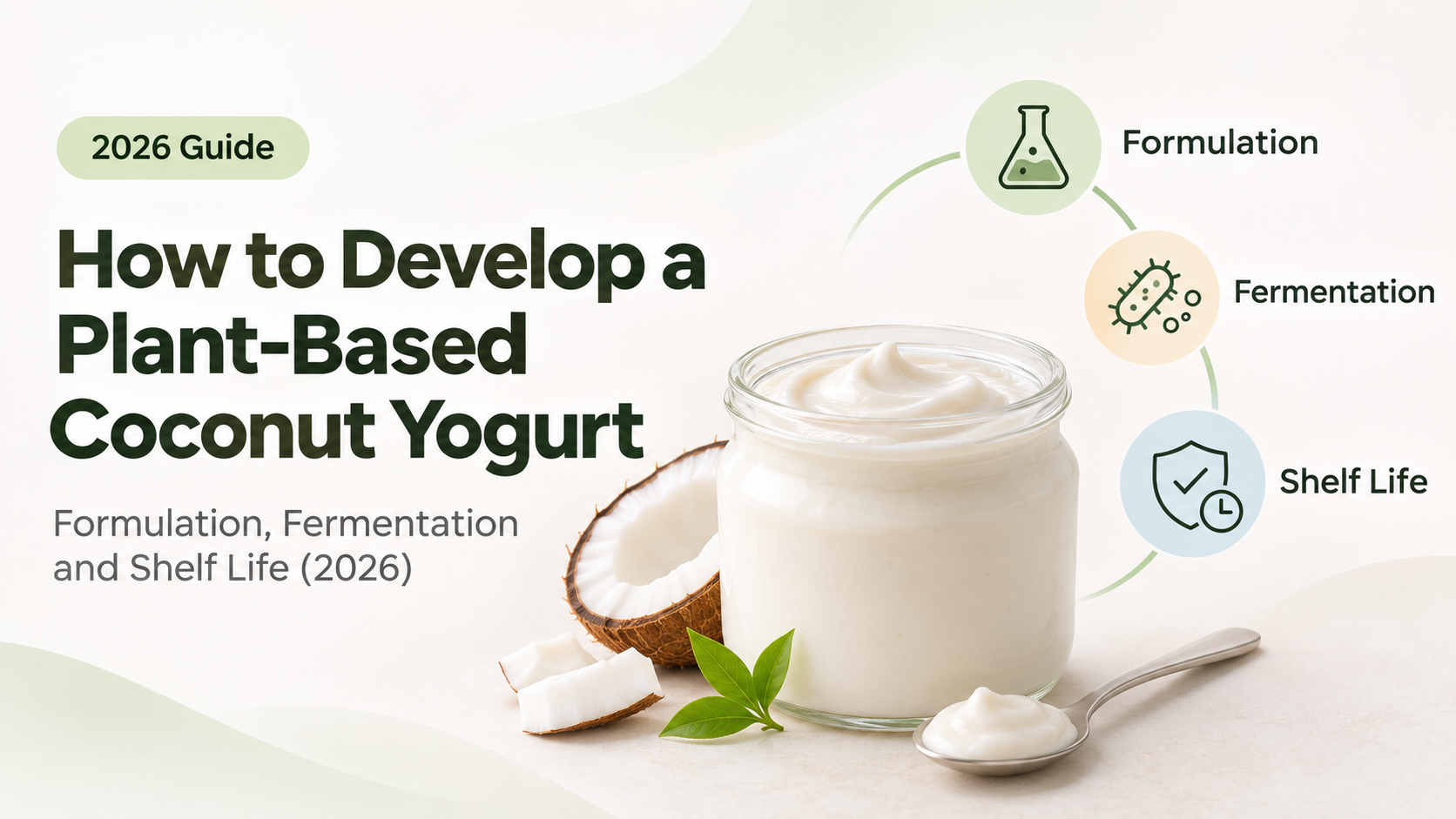
How to Develop a Plant-Based Coconut Yogurt: Formulation, Fermentation and Shelf Life (2026)
Key Takeaways
- Coconut milk ferments well with standard yogurt cultures. An Indonesian study reached pH 4.05 and 11.07 log cfu/ml of lactic acid bacteria after 24 hours in 100% coconut milk (Jurnal Natural, 2023). The same study found commercial cultures worked better once adapted to coconut milk.
- Texture needs help. Adding 3 to 5% corn starch raised viscosity, cut whey separation and won higher liking scores in a coconut yogurt trial (HCMIU study).
- Time and temperature shape flavour. Of trials at 30, 35 and 40°C for 8, 10 or 12 hours, 35°C for 8 hours was liked most and 30°C for 12 hours least (same study).
- Check your product name before you print. FSSAI bars dairy terms on plant-based products, with exceptions such as coconut milk and peanut butter (FSSAI letter, 2021). FSSAI has said "curd" is not exclusively a dairy term (Just Food), so get naming advice before you use "yogurt" on pack.
- A vegan claim needs FSSAI approval. Makers of plant-based alternatives need specific FSSAI approval to use a vegan claim or the vegan logo (DairyReporter, 2023).

Founder & CEO, SolutionBuggy
Arjun N spent a decade in manufacturing and industrial engineering before founding SolutionBuggy in 2016. Today, SolutionBuggy connects 60,000+ registered MSMEs with 12,000+ verified manufacturing consultants across India, with 3,500+ completed projects and a 4.5 client satisfaction rating.
FOUNDER & CEO
Solutions For
Reach Us
Bangalore (Head Office)
#249, 2nd floor, 14th Main Rd, Sector 7, H.S.R Layout, Bangalore - 560102.
Across India : Delhi | Pune | Mumbai | Chennai | Ahmedabad | Hyderabad | Kolkata, and 30+ major cities across India
Copyright © 2026 SolBuggy. All Rights Reserved